Quiche: A fancy way to cook with leftovers

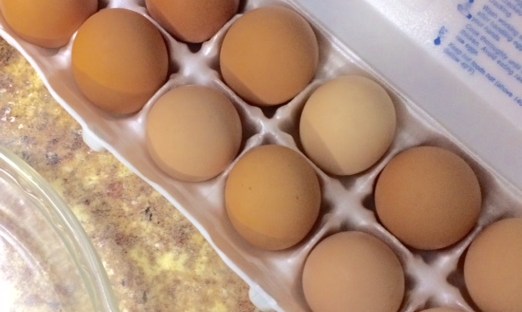
A breakfast and brunch staple, or a sophisticated light dinner, quiche is an extremely versatile meal option that can be quite impressive when serving guests.  Before you get freaked out about the prospect of making homemade crust, don’t worry.  Even I use store bought, pre-made crust from time to time (like when I’m craving chocolate cream pie and only have the energy to make a homemade custard). While the title of this post suggests that my inspiration came from utilizing leftover ingredients in my fridge, it actually came from my chance meeting with some beautiful farm-fresh eggs.  While visiting a friend’s office the other day, someone popped in peddling farm-fresh eggs and I happily bought a dozen brown and tan hued beauties (for only $2, by the way).

I believe the secret to this quiche recipe is the heavy cream in lieu of milk. The heavy cream mixed with the shredded cheese creates such a rich and velvety texture that just can’t be created with plain milk. The beauty of quiche is that you can really add any leftover veggies or meat that you may have on hand. Sausage and peppers the night before for dinner? Add mozzarella cheese and make a quiche for breakfast the next morning! Have fun with it.

Another note is that I always bake my quiche the night before or several hours ahead of serving time. Quiche takes forever to fully cool and set up again, and the flavors come together more overnight or after several hours.

I’ve included my favorite quiche recipe below (from Food Network).

Basic Quiche:

6 eggs
1 1/2 cups heavy cream
1 1/2 cups shredded cheese
salt & pepper
1 (9 in) pie crust (pre-made from refrigerator section is perfectly fine)
2-3 cups veggies and/or meat filling (suggestions below)

Whisk eggs with cream, salt and pepper in a large bowl and stir in cheese and filling. Follow crust directions and place in 9 inch pie dish. Fold edges down and flute the edges of crust. Fill with egg mixture and bake at 375 degrees for 35-45 minutes until the center is just set (you can check the center with a knife to make sure the eggs aren’t runny).

IMPORTANT NOTE: Especially when using a store bought, pre-made crust, cover the quiche with foil after about 20-25 minutes of baking or else the top edges of the crust will burn.

Filling and Flavor Options (I don’t measure the fillings, just eyeball the amounts, but if you’re a stickler for measurements I’d say the meat and veggie ratio should be equal and amount to about 2 cups total):

Bacon & Cheddar
cooked bacon (about 1/2 pound)
sauteed onion (1 small to medium yellow onion, chopped)
cheddar cheese

Ham & Swiss
chopped deli ham
Swiss cheese
sauteed onion (1 small to medium yellow onion, chopped)

Veggie & Cheese
use any leftover veggies you find in your fridge that can be chopped and sauteed, along with sauteed onions (bell peppers, asparagus, broccoli, tomatoes, mushrooms)

Salmon & Dill
If you have any leftover cooked salmon from dinner the night before, shred up a filet or two and add fresh dill and Swiss cheese for a classic breakfast combo.
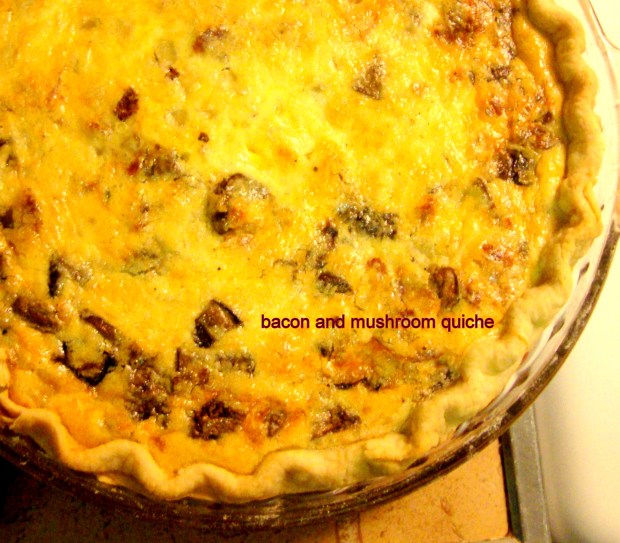
bacon-and-mush-quiche

Kitchen Before & After

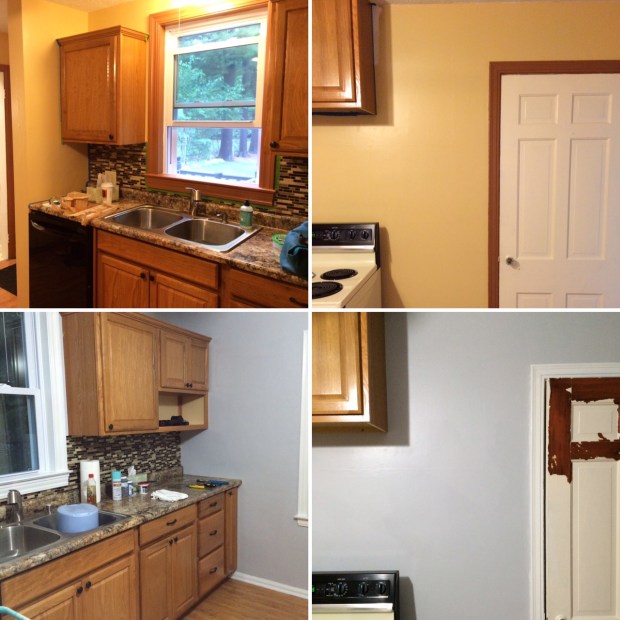
Of all the rooms in my new house, I have to say that my kitchen is my favorite room.  To be fair, a kitchen in any house is probably always my favorite room, but I think my kitchen is especially warm and inviting.  When I first moved in, though, the kitchen was a little too warm for my taste, with a monochromatic color scheme of honey oak cabinets, floors, peach walls and terra cotta trim and yellow tinted light bulbs.  After doing my research online and especially on Pinterest, and summoning my high school art class knowledge of the color wheel, I realized that the overly warm tones of the honey oak woodwork could be easily offset and calmed with a fix as simple as changing the paint color to something from the opposite side of the color wheel.  With two coats of a light grey hue on the walls, and painting the trim white, and changing the light bulbs to “daylight,” my kitchen was transformed.  The honey oak cabinets no longer looked so orangey, and the cool grey color actually made the room look more warm and inviting.  The grey walls made such a difference with the cabinets that some people thought I bought and installed new kitchen cabinets, and I took this feedback as a win!

img_6583

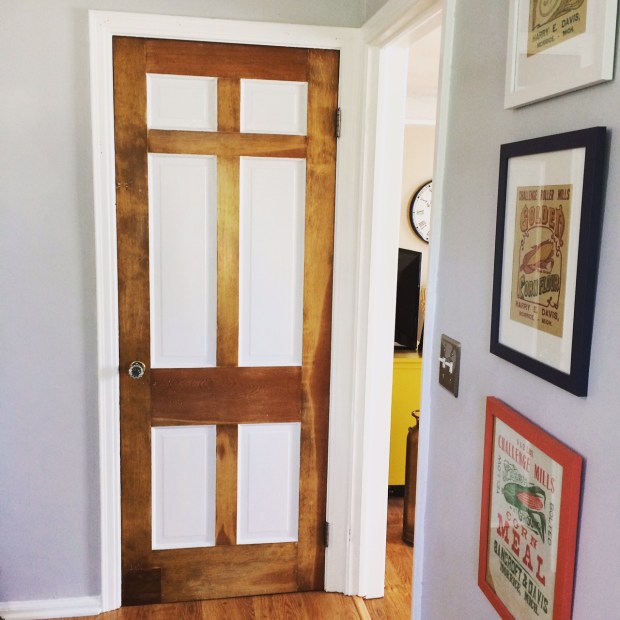
The door to my basement:  As you can see from the photos, at some point my dad and I decided to start peeling paint off one of the doors in the kitchen.  This door is directly across from my backdoor, hence the very first thing I see when I walk into my house.  There were several layers of paint on everything in my house, the doors included, so once we got a spot started, the paint peeled off pretty effortlessly with my fingers.  Although it seemed easy enough, I quickly realized this was not a weekend project I could finish on my own, and should probably be completed by a professional.  So I called my furniture refinished (yes, I have a “guy” who refinishes furniture) and asked him if he’d be interested in stripping a door for me.  Of course, he said, and I dropped the door off a couple of weeks later.  By the end of the weekend, and a couple of phone calls later, my refinisher decided to leave the panels of the door painted white, and I think the door turned out beautifully.  I couldn’t be happier with my custom, original door.  Now I want to strip every door in my house, of course.

kitchen-door

Framed flour bags:  I bought a handful of old flour bags from a local mill at a garage sale almost four years ago for $2/piece, and after finding the perfect frames for them had them hanging up above my bed in my apartment.  The kitchen is a much more appropriate setting for the flour bags, and the colors couldn’t be more perfect for the space.  I love the way the three frames look stacked on the narrow wall.

new-kitchen

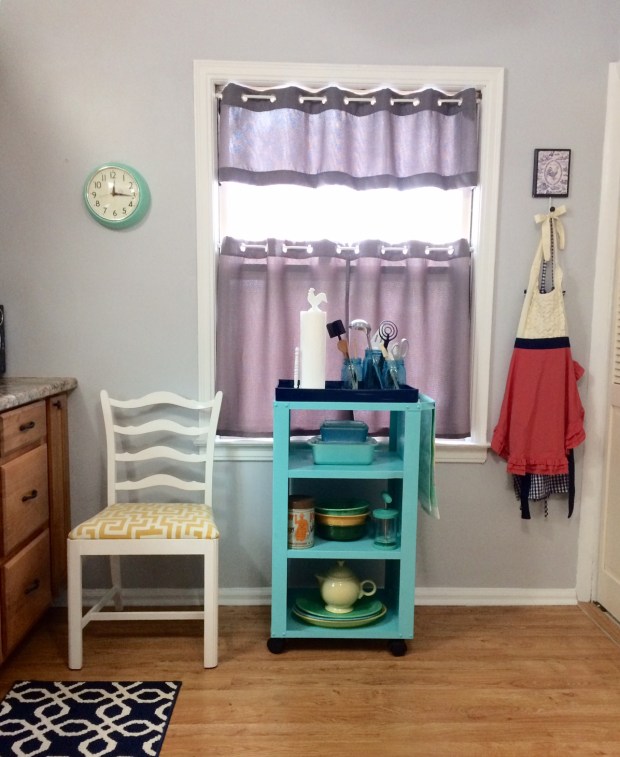
Turquoise kitchen cart:  There’s a story behind this adorable cart that warrants its own post, so check back soon for the story!

Cranberry Sauce

Why do I love cranberry sauce?  Let me count the reasons why.  It’s tart, it’s fresh, it’s festive and bright, and can be used a million different ways.  While I always make homemade cranberry sauce for Thanksgiving, this year’s batch was particularly special because I made it for both my family’s Thanksgiving and the “friendsgiving” dinner I hosted for the seven lovely members of my euchre club.  The sauce was such a hit with my friends that I even took the time to write out the recipe and instructions in a lengthy group email that included all of the Thanksgiving recipes I prepared for the dinner.  And, one friend’s gracious compliment of making every single recipe for her family’s Thanksgiving is, in part, what inspired me to revamp my blog and share my recipes with more people.

Some may find cranberry sauce to be just another traditional side dish on the Thanksgiving table, but the recipe I’ve used for years has a subtle spiciness and a hint of citrus that makes it stand out among everything else on the table.  I’ve included the original Rachael Ray recipe below along with many ideas of how to use cranberry sauce for more than just an accompaniment to turkey.  Especially during the holidays, cranberry sauce is great to have on hand for last minute appetizers and desserts.  I had a small get together at my house the night of Christmas, and guess what I had on hand?  Cranberry Sauce!  I used it for cheese and crackers and as a topping for plain cheesecake that was sitting in my fridge.  Next year I might even jar up the cranberry sauce and give it away as gifts!

What I used:
1 cup water
1 cup sugar
1 cinnamon stick
2 teaspoons finely chopped fresh ginger (I use 1 teas dried, ground ginger b/c I always have it on hand)
2 teaspoons orange zest
1/4 teaspoon salt
1/8 teaspoon ground cloves
1 (12 oz) bag fresh cranberries

Optional:  2 rosemary sprigs (removed shortly after adding the fresh cranberries)

How I made it:
In a medium saucepan, combine 1 cup water with the sugar, cinnamon stick, ginger, orange peel, salt and cloves. Cook over medium heat, stirring constantly, until the sugar is dissolved. Stir in the cranberries (I usually remove the cinnamon stick at this point, but you can leave it in until the very end for a stronger flavor) and bring to a boil, then lower the heat and simmer, stirring, until slightly thickened, about 8 minutes.

Transfer the mixture to a bowl and remove the cinnamon stick. Let cool.

My favorite uses for cranberry sauce:

  • served atop a cracker and a slice of white cheddar cheese
  • as a spread on a turkey sandwich
  • mixed with vanilla yogurt, topped with granola
  • as a topping over plain cheesecake